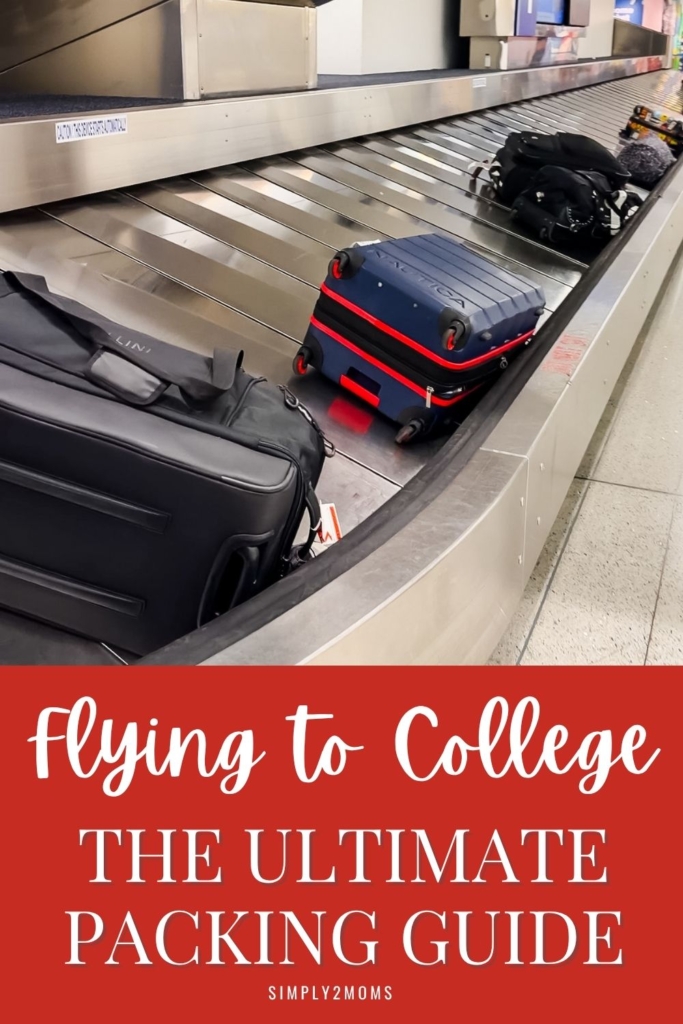
How to Pack for College When You’re Flying
Learn how to pack for college when you’re flying, including what to check, carry on, ship, order online, and buy after you arrive.
Knowing how to pack for college when flying takes a little more planning than loading up the family car and driving to campus.
You can’t just bring a second car and keep adding one more bag because you found another pile of things your student “definitely needs.”
When you’re flying, every suitcase matters. And every pound in that suitcase matters too.
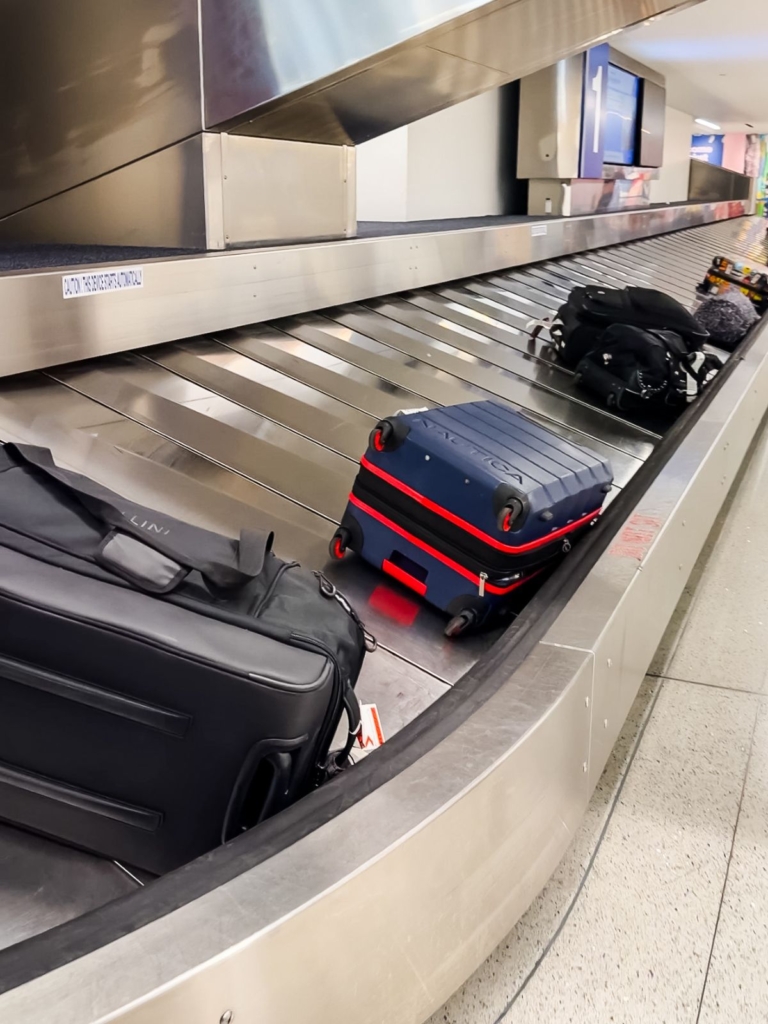
The good news is that your student really doesn’t need to fly across the country with every single thing they’ll use in their dorm room. The trick is figuring out what should go on the plane, what you can ship, what you can order online and pick up there, and what makes more sense to buy after you arrive.
If you’re still figuring out what your student actually needs for college, start with our College Packing List. And if you’re driving to campus, our How to Pack for College Move-In guide has tips for packing everything from clothes and bedding to breakables, toiletries, electronics, and decor.
But if you’re getting on a plane? Let’s talk about how to make that work.
Posts on Simply2Moms may contain affiliate links which means we may earn a small commission on purchases at no extra cost to you. As an Amazon Associate, I earn from qualifying purchases. You can read our full disclosure policy here.
Make a Plan Before You Start Packing
Before you pull the suitcases out, do a little homework.
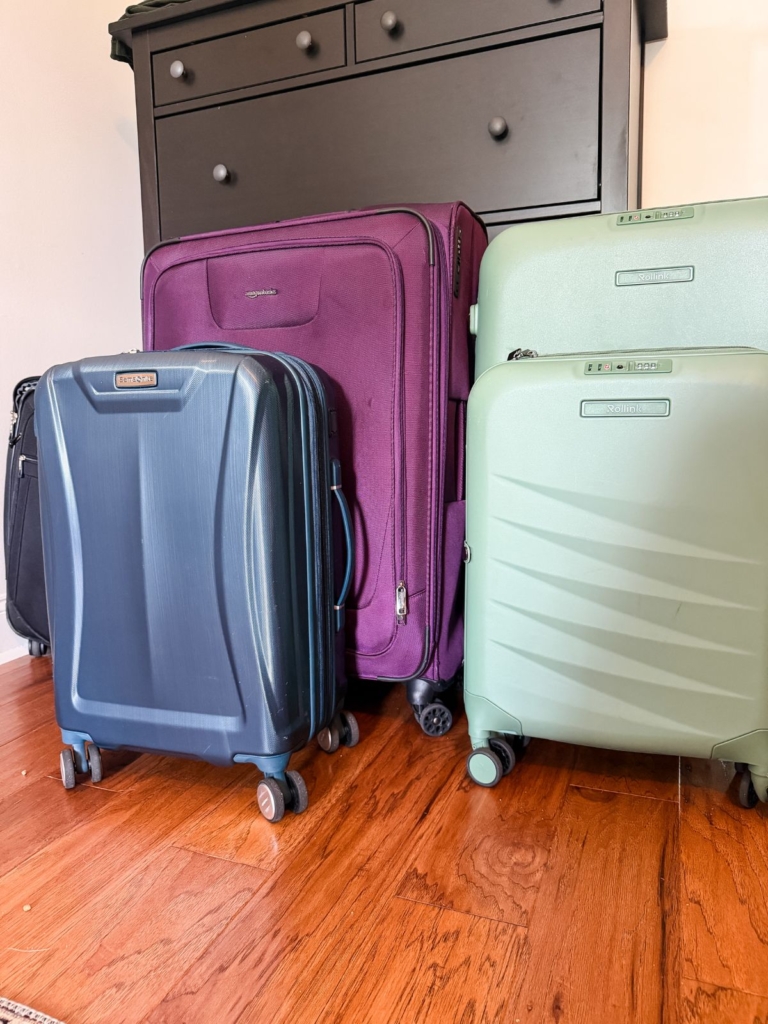
Start with your airline. Check the current size and weight limits for checked luggage, along with the fees for each bag. If you’re traveling as a family, look at what each person’s ticket allows too. You may have more baggage allowance to work with than you realize.
Then look at your other options.
How much would it cost to ship a few boxes? Can you order larger dorm items online and have them delivered near campus? Is there a store close to the college where you can pick up an order?
You’ll also want to check the college’s package policy before shipping anything directly to the dorm. Some schools have very specific instructions about when they’ll accept packages, where they’re delivered, and how students pick them up.
Once you know your options, divide everything your student needs into five categories:
- Bring on the plane
- Pack in checked luggage
- Ship
- Order ahead and pick up
- Buy after you arrive
This is where our College Packing List comes in handy. Go through it item by item and decide which category makes the most sense for everything your student will need.
And remember, you don’t have to choose just one method.
For a long-distance college move, a combination of checked luggage, shipped items, ordering ahead, and a shopping trip after you arrive may be the best answer.
What Should Go in Your Carry-On?
Think of your student’s carry-on as the bag that absolutely, positively cannot disappear.
If the checked luggage takes an unexpected detour to Chicago while you’re standing in a dorm room in Boston, your student should still have the things they really need.
Keep important documents in the carry-on, including identification, insurance cards, and any paperwork they might need for move-in.
Prescription medications should stay with your student too, along with glasses, contacts, and other essentials they can’t easily replace.
Laptops, tablets, phones, and other expensive electronics also belong in a carry-on whenever possible. Don’t forget the chargers.
We also recommend packing one change of clothes, pajamas, and a few basic toiletries that meet current TSA requirements.
Any expensive jewelry, sentimental items, or small valuables should stay with your student rather than going into checked luggage.
Here’s the easiest way to think about it:
If your student’s checked luggage didn’t show up until tomorrow, what would they need to get through the first 24 hours?
Put those things in the carry-on.
What to Pack in Checked Luggage
Checked suitcases are where you’ll probably pack most of your student’s clothes and other soft belongings.
Clothing, shoes, towels, bedding, and other non-breakable dorm items can all go here.
Compression packing cubes can be really helpful for clothing. They keep things organized and allow you to fit more into a suitcase without everything turning into one giant pile.
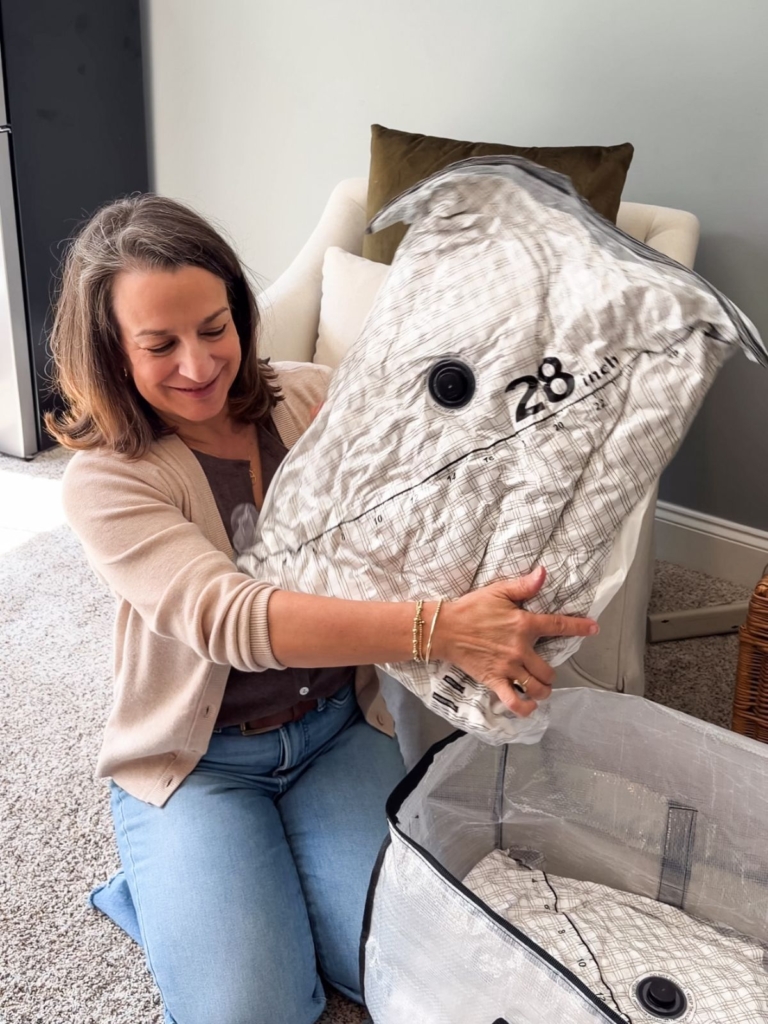
Vacuum storage bags can also save a ton of room, especially for bedding, towels, jackets, and bulky clothing.
But there’s a catch.
Vacuum bags save space. They don’t save weight.
That fluffy comforter might suddenly take up half the room it did before, but it still weighs exactly the same.
It’s surprisingly easy to keep adding things to a beautifully compressed suitcase until you’ve created a 65-pound brick.
Use a luggage scale and weigh every suitcase at home before you leave for the airport.
Seriously.
Don’t wait until you’re standing at the airline counter with an open suitcase on the floor, trying to decide which items you’re able to cram into carry-ons and personal items.
Can You Fly with Moving Bags?
Yes, you can check the XL heavy-duty moving bags instead of traditional suitcases, and they’re a popular choice for college students flying to campus. They’re lightweight, fold flat when not in use, and can hold a surprising amount of clothing, bedding, and other soft items.
Just like a suitcase, the bag still has to meet your airline’s size and weight limits. Most airlines charge extra for oversized or overweight bags, so weigh everything before you leave for the airport.
Because moving bags are made from flexible material, they’re not as durable as hard-sided luggage. We recommend using them only for clothing, towels, bedding, shoes, and other soft items. Leave electronics, breakables, jewelry, and anything valuable in a carry-on or sturdy suitcase.
One trick we’ve found especially helpful is to slide one moving bag inside another before packing. The extra layer adds strength and helps protect against tears during baggage handling.
Before checking the bag, secure the zippers so they can’t work their way open on conveyor belts. Simply place a strip of heavy-duty tape over the zipper pulls so they can’t be accidentally pulled open or snagged.
If you’re looking for an affordable way to get a lot of bulky items to campus, moving bags can be a great alternative to buying another suitcase.
Save Space Inside Your Suitcases and Bags
When you’re flying to college, every inch of suitcase space counts. We’ve found that using compression packing cubes can help you fit more into a suitcase, but don’t forget they don’t reduce the weight of the bag.
Fill shoes with socks, underwear, or other small items instead of letting that space go unused.
Remove unnecessary retail packaging from durable items before packing them. You don’t need to fly cardboard and plastic across the country just to throw it away when you get there.
If your student is bringing boots or bulky sneakers, consider wearing the largest pair on the plane. The same goes for a sweatshirt or jacket.
Will they look like they’re dressed for November when it’s 85 degrees outside?
Maybe.
But that’s one less bulky sweatshirt taking up valuable space in a suitcase.
Split Important Items Between Suitcases
If you’re traveling with more than one checked suitcase, don’t put all of one category into a single bag.
For example, don’t put every single piece of your student’s clothing in one suitcase and all the bedding in another.
Spread things out a little.
Put some clothes in each suitcase. If possible, divide other essentials too.
That way, if one bag is delayed, your student isn’t left with towels and bedding but no shoes.
If a parent or another family member is traveling with the student, you may also be able to spread belongings among everyone’s checked luggage.
Keep Track of Your Luggage
Put a luggage tag on every checked bag with current contact information.
You may also want to place a copy of your student’s name and contact information inside the suitcase. If the exterior luggage tag gets damaged or lost, there’s still identifying information inside.
A tracking device can also give you some peace of mind with checked luggage.
And before you zip everything closed, take a few quick photos of what’s inside each suitcase.
You don’t need to photograph every sock. Just get an overview of the contents, especially if you’re packing anything valuable.
Order Online and Pick Up Near Campus
Another way to avoid flying with a dorm room full of stuff is to order some of it online before you leave home.
Many major retailers allow you to place an order online and choose a store near the campus for pickup. This works especially well for bulky items like mattress toppers, pillows, storage bins, lamps, cleaning supplies, and other dorm essentials.
The key is to order ahead.
Stores near college campuses can get pretty picked over during move-in season, especially when thousands of students are looking for the same items. Ordering before you travel means you don’t have to cross your fingers and hope everything you need is still on the shelf.
Some colleges also allow students to have packages shipped directly to campus before move-in. If your student’s school offers this, you may be able to order items online and have them waiting there on campus when you arrive.
Just make sure you check the school’s policies first. Find out when they’ll start accepting packages, how they need to be addressed, where they’re held, and when your student can pick them up.
Every school handles this differently, so don’t assume you can start shipping boxes to the dorm in June.
Between store pickup and campus delivery, you may be able to do a good portion of your dorm shopping before you ever get on the plane, without actually having to fly any of it there.
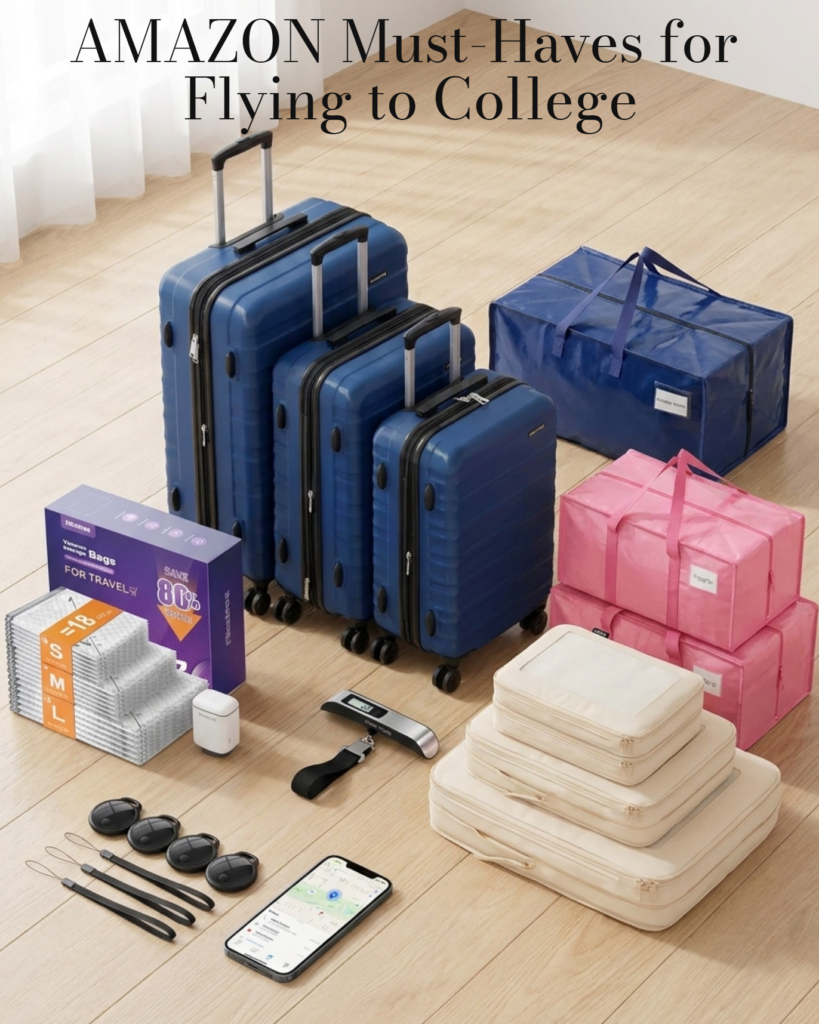
SHOP Amazon Must-haves for flying to college.
What Should You Ship to College?
If your student already owns something they want to bring to college, but it doesn’t make sense to put it in a suitcase, shipping it may be the easiest option.
This could include decor, books, hobby or sports equipment, or other personal belongings they already have at home. Basically, anything that’s too bulky or awkward to fly with but isn’t something you want to buy all over again.
Shipping can also be helpful if your student is bringing more clothes than will comfortably fit in their luggage. You might pack what they’ll need right away and ship the rest separately.
Before you start filling boxes, compare the cost of shipping with the cost of checking an additional bag. Depending on the size and weight of what you’re sending, one may be considerably cheaper than the other.
You’ll also need to decide where to send everything. Some colleges allow students to ship packages directly to campus before move-in, while others don’t begin accepting packages until a specific date. Check the school’s policy to find out when packages can arrive, how they should be addressed, and where your student will pick them up.
If shipping directly to campus isn’t an option, look into whether you can ship boxes to your hotel, a storage facility, or another approved pickup location nearby.
Should You Ship Boxes or Check More Bags?
There’s no one “right” answer to this.
It depends on where you’re flying, which airline you’re using, how many people are traveling, and what you’re bringing.
Checked luggage has one big advantage: it travels with you.
You don’t have to worry about coordinating delivery dates or figuring out where a package is being held once you arrive.
Shipping gives you more flexibility with bulky items and can free up suitcase space, but you’ll need to plan ahead.
Before you decide, compare the actual costs.
Look at the cost of checking an additional bag versus shipping a box of the same approximate weight and size.
You may find that checking another suitcase is cheaper. Or shipping may win.
A lot of families will end up doing some of both.
What Should You Buy After You Arrive?
Here’s where we think parents can save themselves a lot of hassle.
There are many items that you can easily buy when you get there.
Think about things like:
- School supplies
- Laundry detergent
- Paper products
- Cleaning supplies
- Toiletries
- Snacks
The same may be true for some dorm essentials. Just remember that stores near college campuses can get pretty picked over during peak move-in weekends.
Think Ahead to the Trip Home
This is easy to forget when you’re focused on getting your student to college, but eventually, some of this stuff has to come home.
Maybe.
Students who drive back and forth to campus may travel with their pillow from home. But students who fly will generally have pillows in both places to use over breaks. The same for toiletries.
When they’re flying home, they should plan to just travel with what they actually need, like clothing and electronics.
The bigger question comes at the end of the school year.
If your student lives far enough away that you’ll be flying again, think about summer storage options near campus. Paying to store bulky dorm items for a few months may make more sense than shipping or flying everything home and then sending it all back again in August.
We cover summer storage options, along with plenty of other ways to make the end-of-year move easier, in our College Move-Out Tips Guide. It doesn’t hurt to start thinking about these things now, so you don’t have to navigate moving everything twice a year.
A Few Final Tips for Flying to College
Flying to college may take a little more planning, but nobody expects you to squeeze everything for an entire dorm room into two suitcases.
Before you start packing, remember:
- Check your airline’s current baggage rules and fees.
- Keep medications, documents, electronics, and valuables in your student’s carry-on.
- Pack at least one change of clothes in the carry-on.
- Use compression cubes and vacuum bags to save space, but watch the weight.
- Weigh every suitcase before you leave home.
- Compare the cost of checking extra bags with shipping boxes.
- Check the college’s package policy before shipping anything to campus.
- Buy toiletries, cleaning, and paper products after you arrive.
- Split essentials between suitcases in case one is delayed.
- Think ahead to moving back home
A little planning on the front end can save you a lot of headaches later.
Ready for College Move-In?
Once you and your student’s belongings have made it to campus, you’ve got the actual move-in to tackle.
Our College Move-In Day Guide walks you through what to expect and how to make the day go more smoothly, based on everything we’ve learned through 10 years of college move-ins with our own families.
You can also check out our How to Pack for College Move-In guide for more detailed tips on packing clothing, bedding, toiletries, breakables, electronics, jewelry, and everything else they’re bringing.
Flying changes the logistics, but it doesn’t have to make the whole process harder.
Decide what goes with you, what gets shipped, and what can wait until you get there.
Then zip the suitcases and call it done.
If you have any questions or suggestions, contact us or leave a comment below.
Don’t miss any of our tips, tricks, or stories! We’d love for you to follow us on social media. You can find us on YouTube, TikTok, Instagram, Pinterest, and Facebook.

Pin it to Remember it: