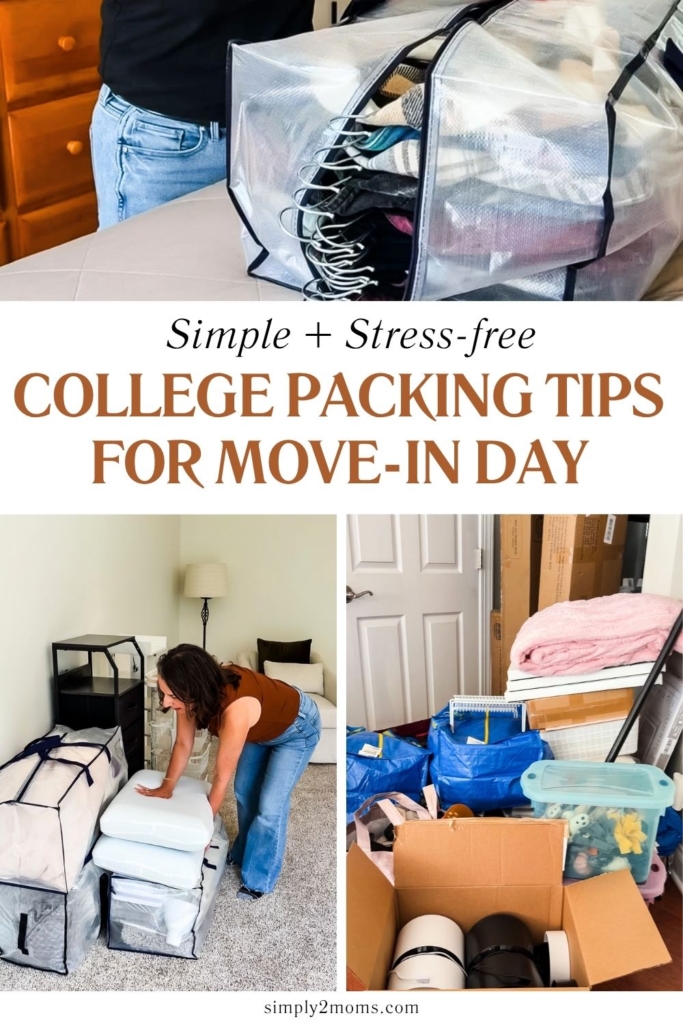
How to Pack for College Move-In
Learn how to pack for college move-in with tips for clothes, bedding, breakables, toiletries, electronics, and more.
Knowing how to pack for college move-in can feel a little overwhelming once you see everything your student plans to bring piled up in their room or stacked on your dining room table.
Packing for college is a little like packing for a whole-house move, just on a much smaller scale. You’ve got clothes, bedding, towels, toiletries, shoes, electronics, decor, and a bunch of random little things that need to make it from your house to a very small dorm room.
And not everything should be packed the same way.
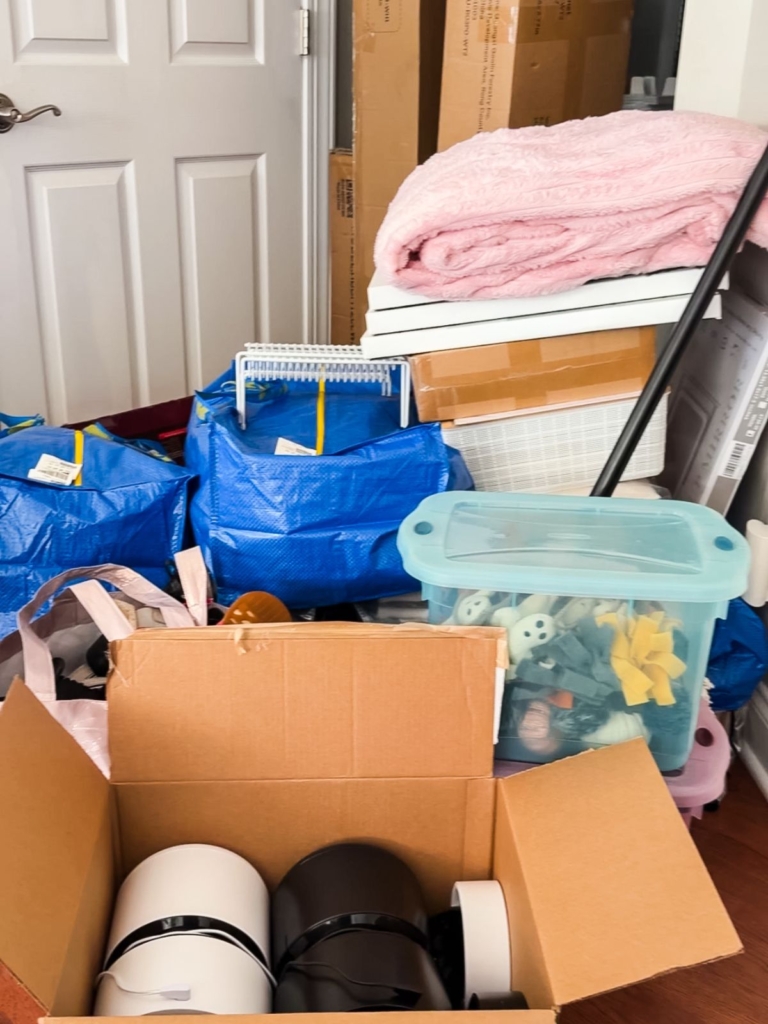
Some things need protection and should be packed into a more rigid container. Others need to be squished down as small as humanly possible into big moving bags. And some things should absolutely stay in the packaging they came in.
After helping our six kids pack for college and making more college moves than we care to count, we’ve figured out a few things that make packing it all up a whole lot easier.
We’re sharing our best tips for packing everything from clothes and bedding to toiletries, breakables, jewelry, electronics, and dorm decor. We’ll also cover which packing containers work best, what you should leave in its original packaging, ways to save space, and how to pack when your student is flying to college.
If your student is flying to college instead of driving, we’ve put together a separate guide just for that. We’ll link to it below since packing for air travel is a little different.
If you’re looking for tips on loading the car, unloading at the dorm, and handling the actual move-in process, head over to our complete College Move-In Day Guide.
For now, let’s get everything packed.
Posts on Simply2Moms may contain affiliate links which means we may earn a small commission on purchases at no extra cost to you. As an Amazon Associate, I earn from qualifying purchases. You can read our full disclosure policy here.
Before You Start Packing for College
Before you start packing anything, make sure you actually know what your student needs to bring.
Our College Packing List walks you through what to buy and bring for a dorm room, so start there if you’re still in the shopping and list-making stage.
It’s also a good idea to check the college’s prohibited-items list to make sure you don’t buy things they can’t use. Have your student coordinate with their roommate about anything they might share. You really don’t need two rugs, two vacuums, two coffee makers, and two mini fridges taking up space in a tiny room.
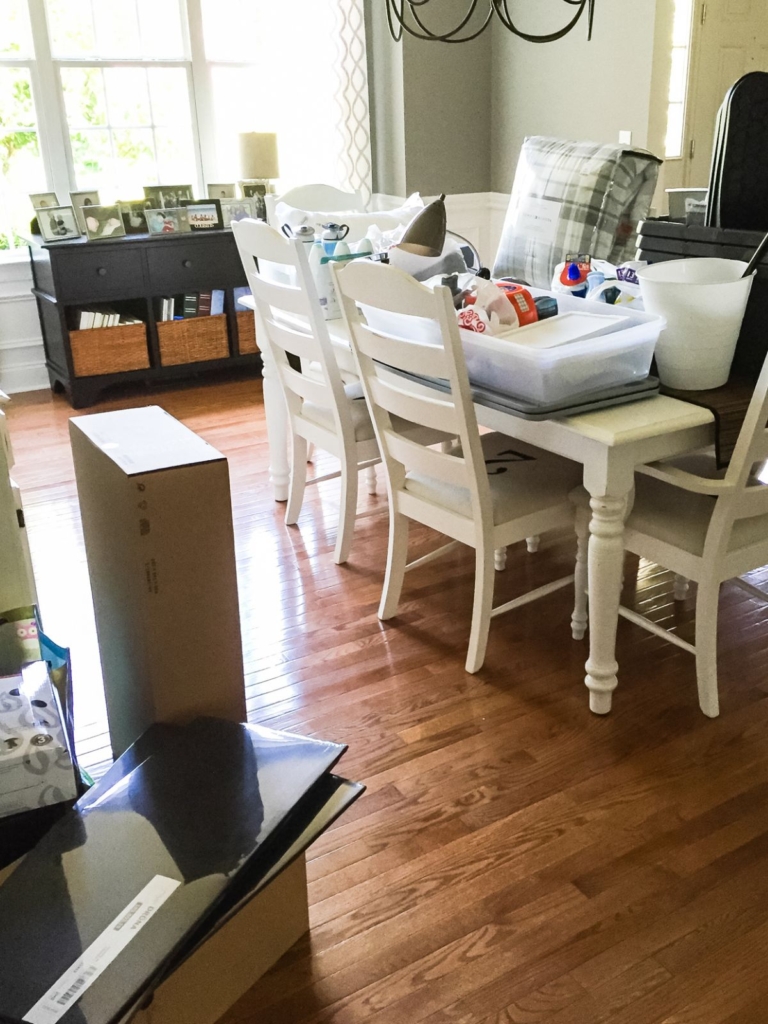
As you start buying things, designate one area of your house as the college staging area. A spare bedroom is great if you have one, but a corner of the dining room, basement, or garage works too. Keeping everything that’s going to college in one spot makes it much easier to see what you have and, more importantly, what you might still be missing.
When it’s time to begin packing, pack by category. Keep bedding together, bathroom items together, desk supplies together, and so on.
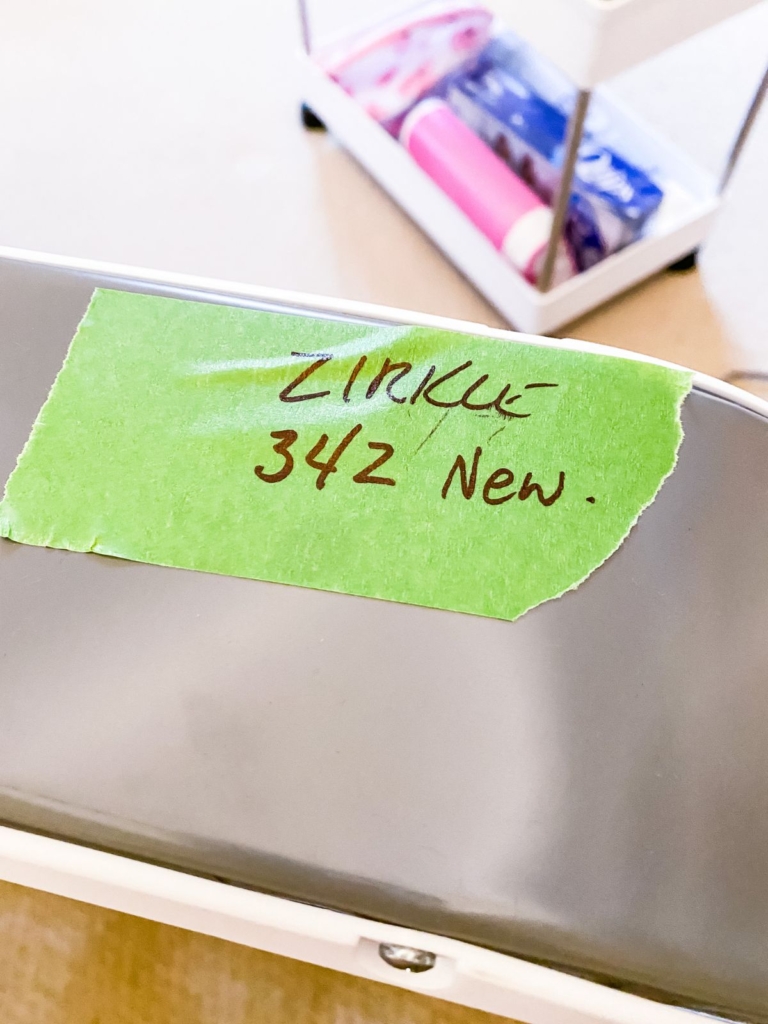
Be sure to label everything. Put your student’s name, the name of their dorm, and their room number on every bag, bin, and tote. If you want, you can add a quick description of what’s inside, but since this is all for one room it’s not really necessary. Painter’s tape and a Sharpie work great.
Choose the Right Container for What You’re Packing
While you could use cardboard moving boxes, there are several better options for most college moves that you can reuse year after year.
Here’s what we like to use:
XL zippered moving bags: For years these were the blue zippered IKEA bags. Now they’re available in lots of colors from Amazon. These are perfect for linens, clothing, and oddly-shaped items. We use these for all kinds of things because they’re easy to carry and fold flat when you’re done with them.
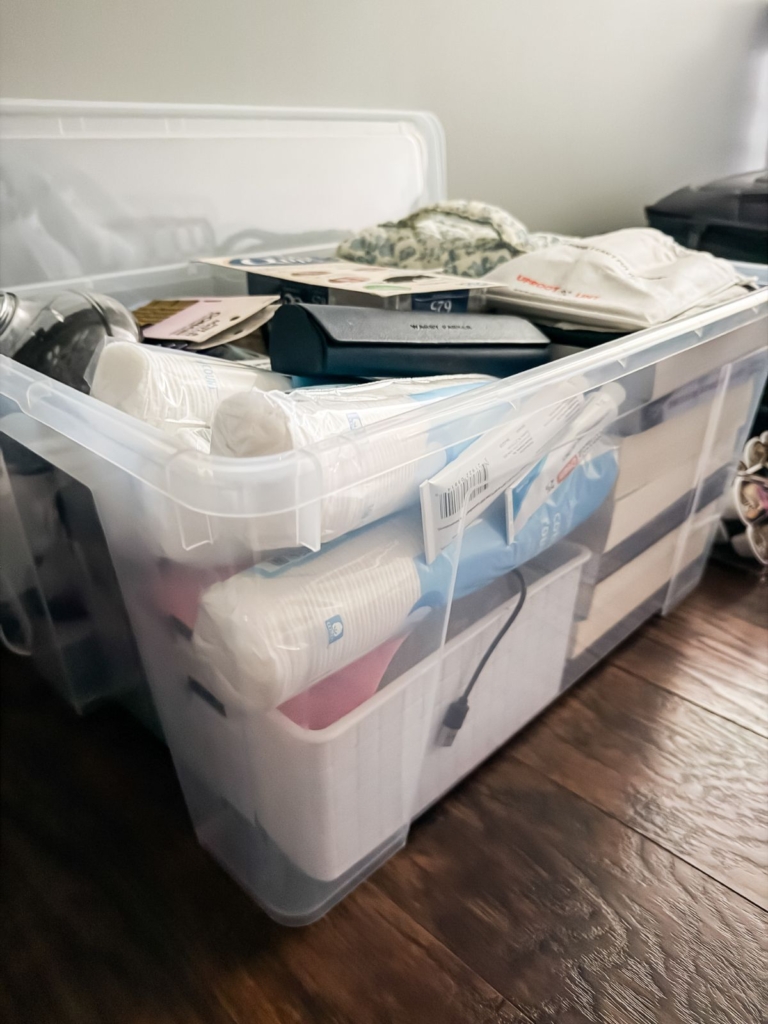
Plastic totes with lids: Use these when something needs a little more protection, especially breakable items. We like that these can be easily stacked and moved using a hand truck or dolly.
Suitcases: These are great for moving folded clothing and shoes. If there’s room, leave one in their dorm room for trips home for breaks.
Compression packing cubes: These are especially helpful for organizing clothes inside suitcases and can save quite a bit of room.
Vacuum storage bags: Great for bedding, linens, towels, pillows, jackets, and bulky clothing. We were shocked by how much space they save!
The storage you’re already bringing: Don’t bring anything to campus empty! Use all the bins, baskets, hampers, and other dorm storage purchases to hold things on the way to college.
The basic rule is pretty simple: soft stuff can go in soft containers. Anything breakable or crushable needs something sturdier or should be wrapped with something that cushions it.
How to Pack Bedding, Linens, and Towels for College
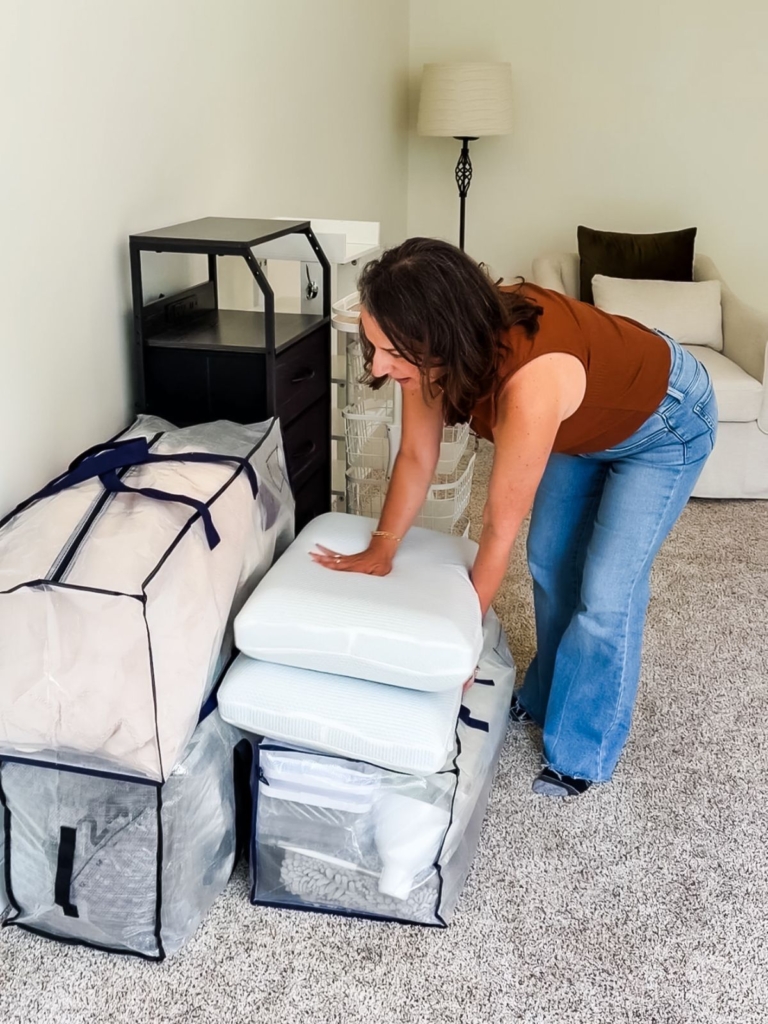
We love using the XL Moving bags to pack bedding and linens. They are bulky and take up a lot of room, so if space is limited, you may want to use vacuum storage bags. This is a great hack to minimize the space you’ll need for comforters, blankets, towels, and even pillows.
Be careful about vacuum sealing anything made from foam or delicate down. Check the manufacturer’s instructions first.
And remember, vacuum bags save space, not weight.
That’s not a big deal when you’re driving, but it matters quite a bit if your student is flying to college.
How to Pack Clothes for College
There are two types of clothes when you’re packing for college: the ones already hanging in the closet and everything else.
Keep Hanging Clothes on Their Hangers
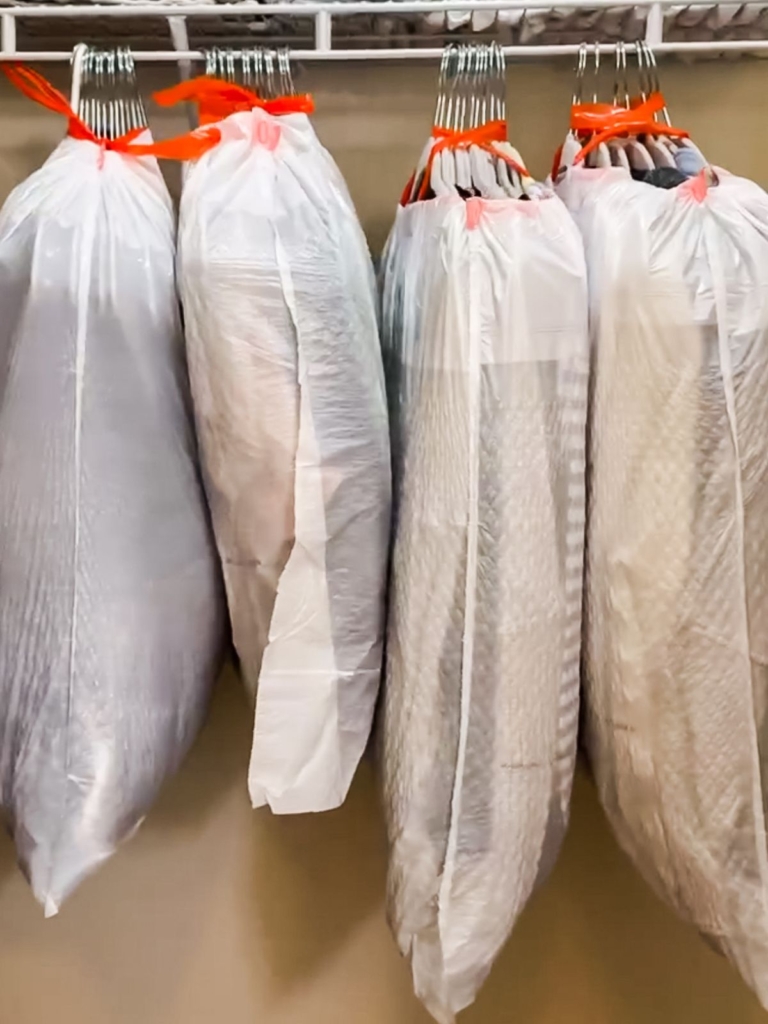
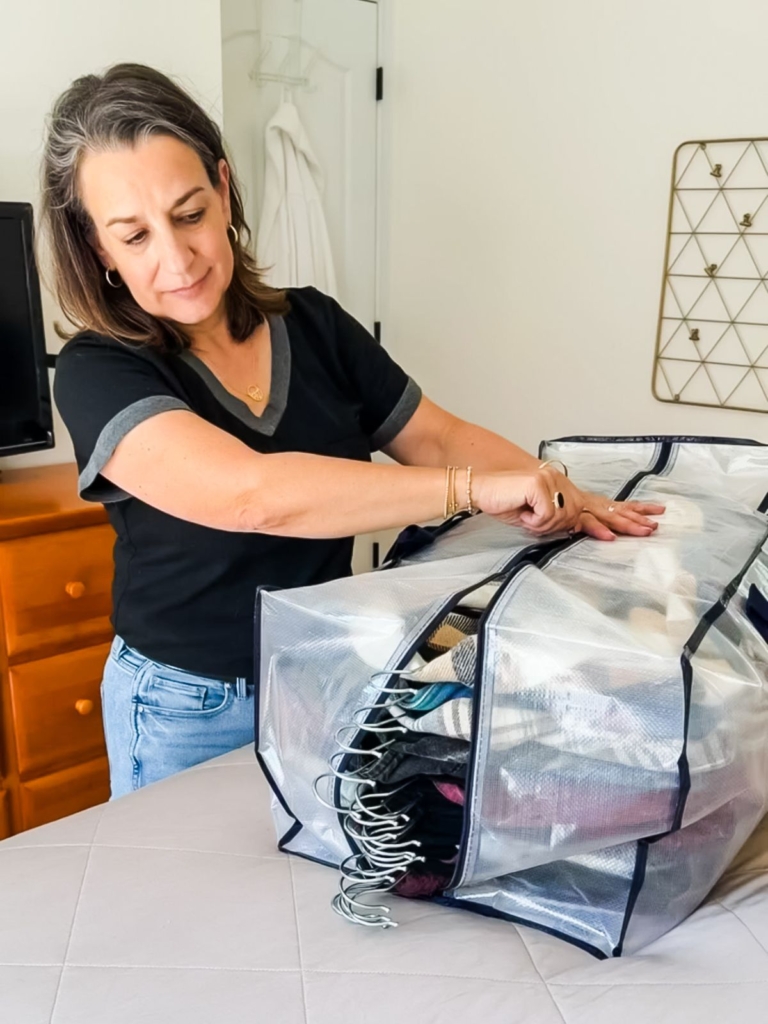
Save yourself a lot of time by skipping taking everything off the hanger just to pack it, then hanging it all up again at school.
Group several hangers together and cover the clothes with a large trash bag, garment bag, or moving bag. The number you can keep together will depend on how bulky the clothes are and whether you’re using slimline or regular hangers.
If you use trash bags, tie the bag handles around the hangers or use zip ties to keep them in place.
You can also use some kinds of XL moving bags to easily transport hanging clothes.
Pack Folded Clothes in Suitcases
Suitcases or moving bags are perfect for jeans, shorts, T-shirts, pajamas, and other folded clothing.
Compression packing cubes can help you fit more into each one while keeping everything organized. You can separate clothes by type, which also makes unpacking easier.
Use the little empty spaces too. Socks and other small items can go inside shoes instead of taking up their own space.
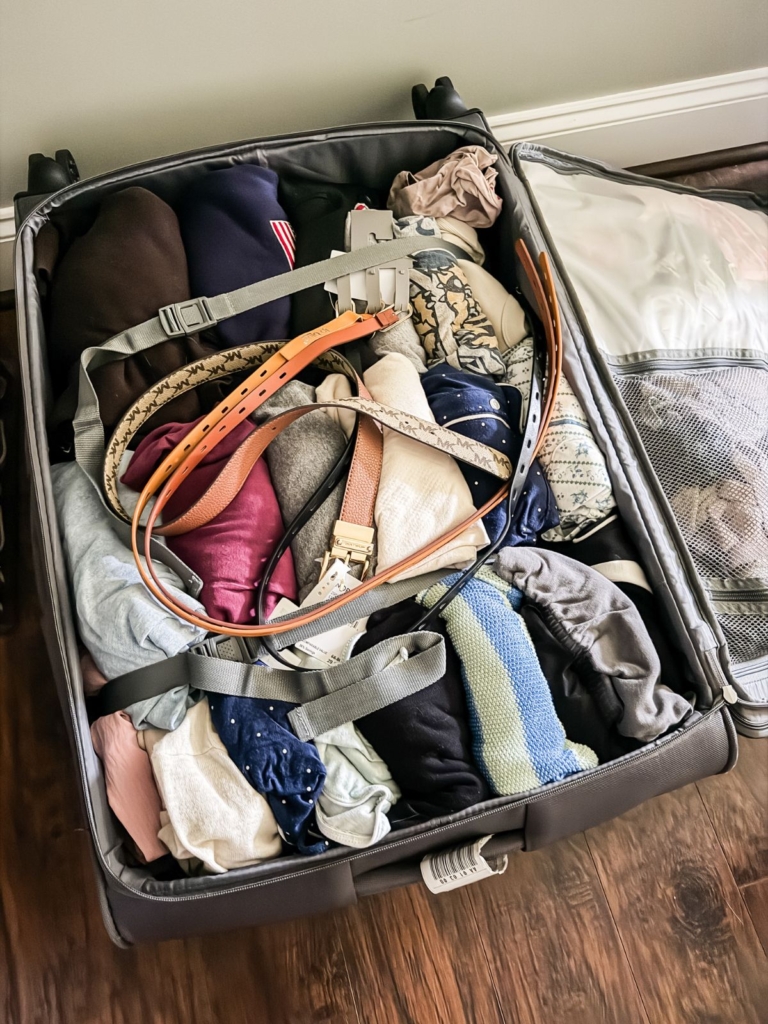
When you’re packing clothing, be sure to think about the season.
If your student is coming home before the weather changes, they probably don’t need their entire winter wardrobe in August. You may be able to leave the bulky coats and sweaters at home and swap clothes later when they come home for fall break.
How to Pack Shoes
Shoes can go into XL moving bags or suitcases. If you don’t want to clean the soles of the shoes, you should put them inside trash bags or plastic grocery bags to prevent dirty soles from rubbing against clean clothes.
Stuff socks or other small, soft items into sneakers and boots to fill the empty space.
How to Pack Toiletries and Anything That Might Leak
We’ve all had the shampoo bottle explode in a suitcase at some point, right?
Now imagine it leaking all over a brand-new comforter or other dorm decor.
No thanks.
Tighten every cap before packing. For bottles that you’re worried about, unscrew the cap, place a small piece of plastic wrap over the opening, and screw the cap back on. There are even silicone caps you can use to prevent spills and leaks.
Then put anything that could leak into a zippered plastic bag.
Pack liquids in containers that are separate from bedding, clothing, electronics, and important papers whenever possible. If you have a plastic bathroom bin or organizer your student will use in the dorm, you can pack toiletries directly inside it.
You may also want to think about what actually needs to make the trip.
Large bottles of shampoo, body wash, and laundry detergent take up space and can be heavy. Depending on how far you’re traveling, it may make more sense to buy some of those basics after you arrive.
How to Pack Breakable Items
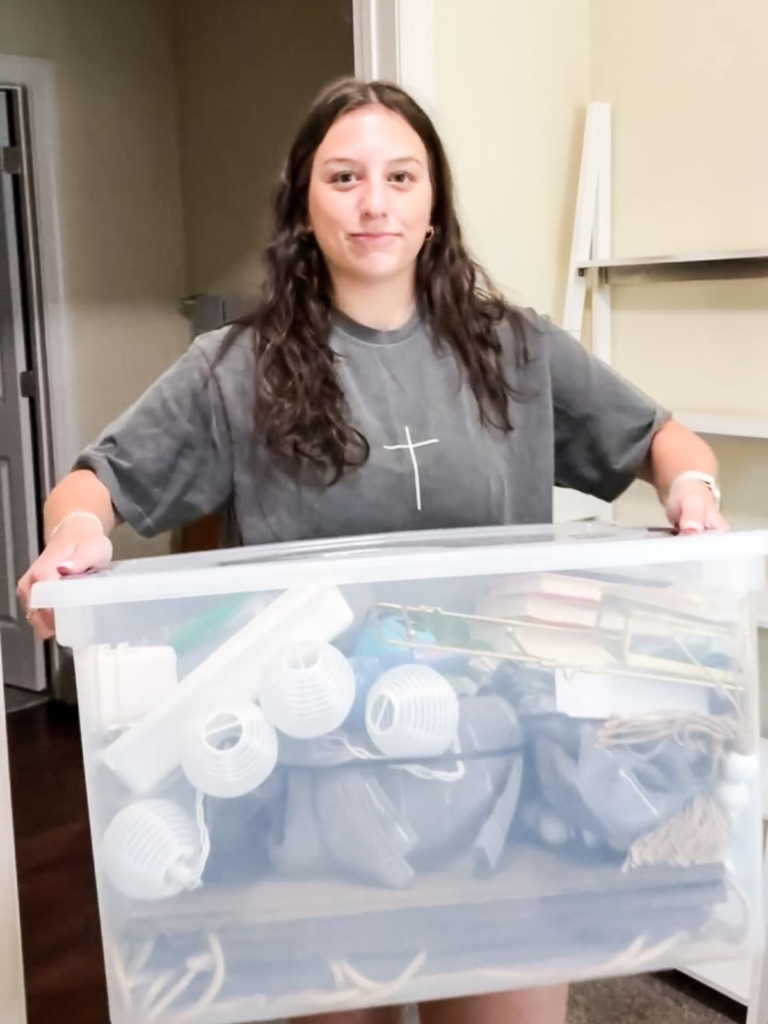
Anything breakable should go into a sturdy plastic tote with a secure lid or be wrapped securely if you’re only using the moving bags.
Wrap fragile items individually and make sure they can’t shift around inside the tote.
You generally don’t need to buy a bunch of bubble wrap. Towels, washcloths, T-shirts, sweatshirts, and other soft items make great padding around breakables. Put heavier items toward the bottom and lighter, more fragile things on top.
If you’re packing picture frames or a small mirror, placing a piece of cardboard over the glass before wrapping it adds another layer of protection.
And don’t forget to label the tote or bag as FRAGILE in case the school has volunteers to help with move in.
How to Pack Jewelry and Small Valuables
College probably isn’t the place to bring valuable or sentimental pieces of jewelry. Be sure to bring a small lock box to protect them if your student decides to bring some.
Use a travel jewelry organizer or a small divided case to pack what they do bring.
Necklaces are usually the biggest headache because they somehow manage to tie themselves into knots when no one is looking. A few options to minimize this:
- Threading delicate chains through drinking straws
- Placing individual necklaces into small zippered bags
- Lying necklaces on a piece of cardboard and wrapping it with press-and-seal wrap
Buttons with two holes are a simple trick for keeping pairs of earrings together.
If you’re flying to campus, keep expensive or sentimental jewelry and other small valuables with your student rather than burying them inside a checked suitcase or tote.
How to Pack Electronics and Cords
Laptops, tablets, and other expensive electronics should stay in your student’s backpack with padded sections whenever possible.
For other electronics, use the original packaging if you still have it, since it provides good protection. Otherwise, wrap anything fragile and place it in a sturdy container that can’t be crushed. Don’t pack anything with a screen in a soft-sided bag.
Keep cords and chargers organized as you pack. One easy option is to put each device’s charger in a labeled zippered bag and pack it taped to the device. You can also use reusable cord organizers if you already have them.
If you’re disconnecting a computer setup, gaming system, or anything else with multiple cords, take a quick photo before unplugging everything. You may want to use painter’s tape and a permanent marker to label each cord.
Future you will be glad you did.
How to Pack Dorm Decor
Get rid of any unnecessary packaging.
Throw pillows can go into moving bags or vacuum storage bags. Soft decor can be tucked into empty spaces around other non-breakable items.
Frames, mirrors, lamps, and anything crushable should be protected and packed in sturdy totes.
Roll posters and prints rather than folding them.
And look for opportunities to nest things together. If one basket fits inside another basket, stack them. If small decor items fit safely inside a larger container, use that space.
Which brings us to one of our favorite packing rules…
Don’t Transport Empty Space
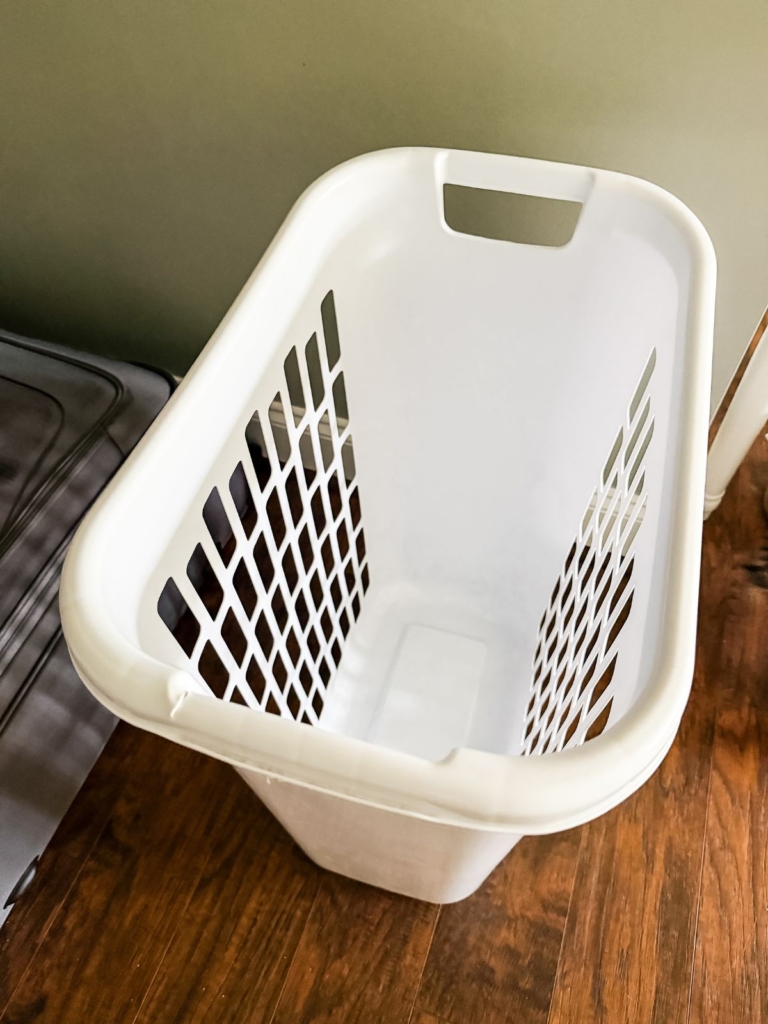
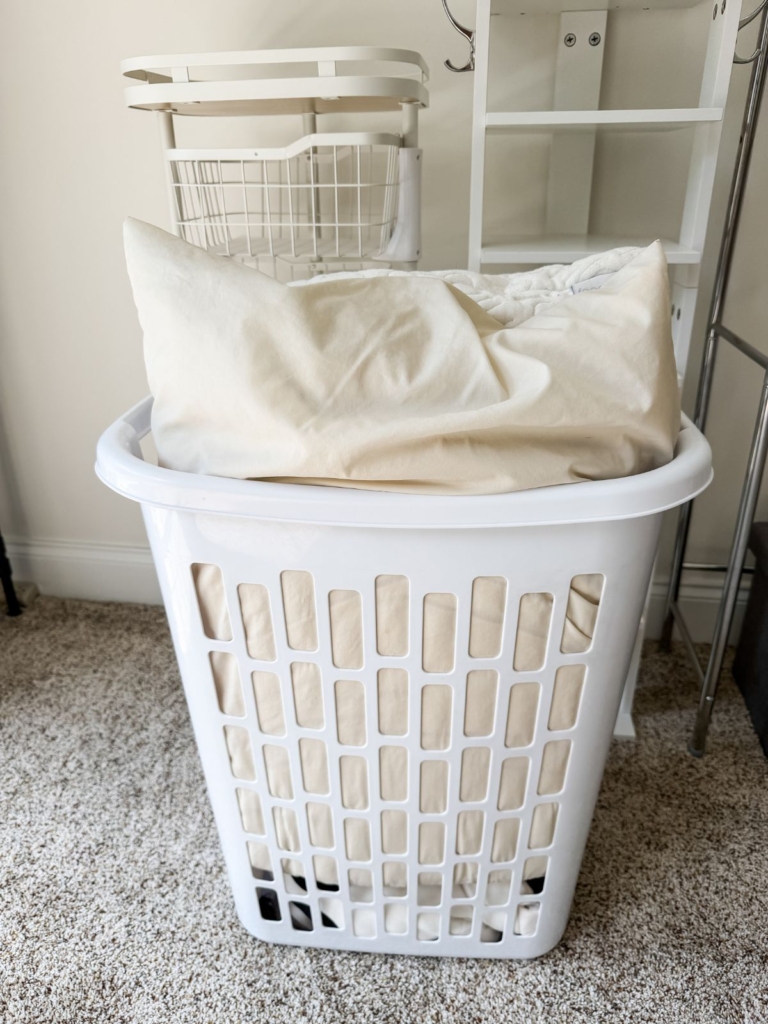
If you’re bringing something that can hold other things, fill it.
Pack linens inside a hamper.
Put desk supplies inside desk organizers.
If you’re bringing plastic drawer units, fill the drawers with lightweight, non-breakable items.
If your family is bringing the mini fridge or microwave, be sure to pack items inside those too!
You’d be surprised how much space you can save just by looking at everything you’re bringing and asking, “Can I put something inside this?”
Remove Items From Their Packaging…Except When You Shouldn’t
Retail packaging can take up a LOT of unnecessary space.
Storage bins, organizers, hangers, towels, linens, plastic kitchen items, decor, school supplies, and other durable purchases can usually come out of their packaging before you pack them.
You’ll be amazed at how much time it takes to remove all the packaging and how much space it will save!
But there are exceptions.
If the original packaging is protecting something fragile, leave it alone. The same goes for certain electronics or anything you think you may need to return.
And there are two big dorm items we recommend keeping in their original packaging: mattress toppers and rugs.
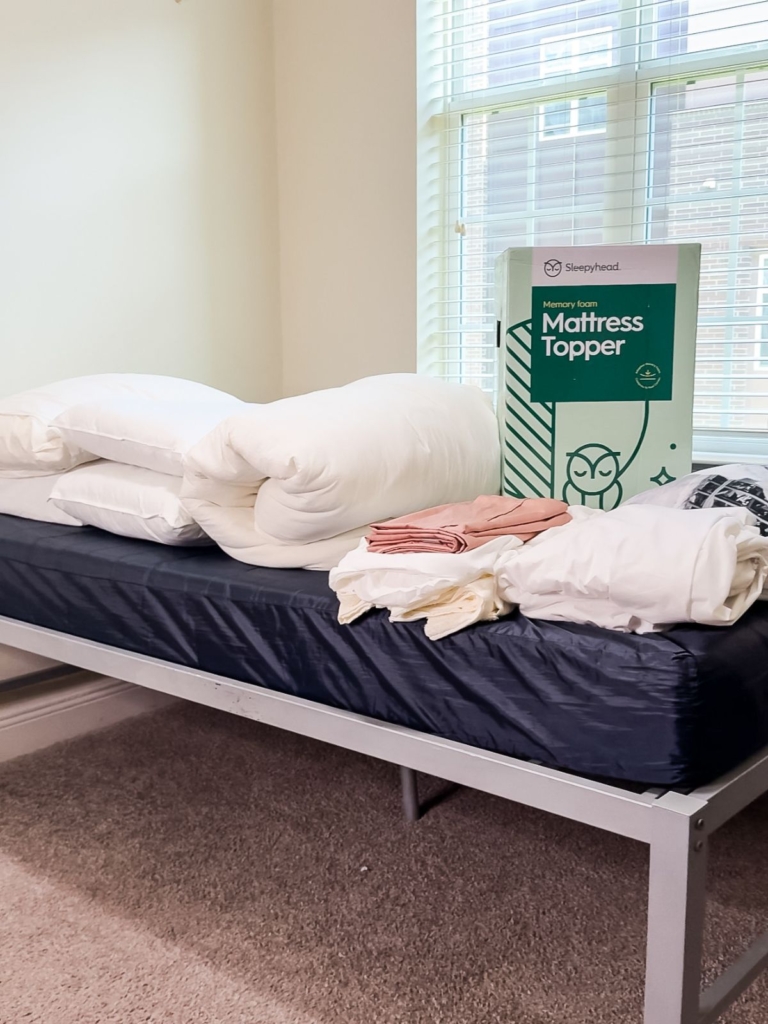
Don’t Unpack the Mattress Topper at Home
Seriously. Leave it in the package.
Mattress toppers are usually compressed at the factory. Once you open that packaging and the topper expands, good luck getting it anywhere close to that size again.
Keep the mattress topper sealed in its original packaging until you get to the dorm.
Keep Rugs Rolled and Packaged
The same idea applies to dorm rugs.
If the rug arrives tightly rolled and wrapped in plastic, leave it that way for the move. The packaging keeps the rug compact, clean, and easier to handle.
Once you’re in the dorm, you can unwrap and unroll it.
Sometimes the best packing hack is simply…don’t open it yet.
Packing for College When You’re Flying
If your student is going to college further from home, you’ll need to plan to pack for a flight. This looks a little different than packing the car for move-in day.
You’ll need to think about airline baggage limits, what belongs in your carry-on, whether it’s cheaper to check bags or ship boxes, whether you can order from stores online and pick up locally, and which items are better purchased after you arrive.
Because there are so many extra considerations, we put together a separate guide:
How to Pack for College When You’re Flying.
There, we cover:
- What to pack in checked luggage
- What should stay in your carry-on
- What to ship instead
- What to buy after you arrive
- How to save money on baggage fees
- Tips for flying with dorm essentials
A Few Final College Packing Tips
There’s no one “right” way to pack for college, but these simple tips will help you save space, stay organized, and protect your student’s belongings. If you only remember a few things from this guide, make them these.
- Keep similar things together.
- Label every container with your student’s name and what’s inside.
- Don’t make any one bag or tote so heavy that no one can comfortably lift it.
- Use soft items as padding whenever you can.
- Fill empty spaces, but don’t cram fragile things together just to save a few inches.
- They don’t have to bring everything they own.
One thing we’ve learned over the years is that it’s very easy to overestimate how much will fit into a dorm room. If your student can live without something for the first few weeks, you can always bring it later, ship it, or have them pick it up if they realize they actually need it.
Everything’s Packed. Now What?
Once everything is packed, the next challenge is getting it all to campus and into the dorm.
That’s a whole different conversation.
Our College Move-In Day Guide covers the actual move-in process, including what to expect, how to make the day easier, and the little things we’ve learned through 10 years of helping our own kids move into college.
Because packing the stuff is one job.
Getting all of it into a dorm room and making it through goodbye? That’s another.
If you have any questions or suggestions, contact us or leave a comment below.
Don’t miss any of our tips, tricks, or stories! We’d love for you to follow us on social media. You can find us on YouTube, TikTok, Instagram, Pinterest, and Facebook.

Pin it to Remember it: